

India Best Tourist Places: The Ultimate Guide to 30+ Must-Visit Destinations
Ask ten travelers what the best tourist places in India are and you’ll get ten different answers – and all of them will be right. India isn’t one destination, it’s a continent’s worth of them: Mughal marble in the north, palm-fringed backwaters in the south, Himalayan monasteries in the far north, and desert forts in the west, often just a few hours apart by train.
This guide covers India’s best tourist places in real depth – not just names on a list, but what to actually do there, how long to stay, and when to go – organized by region and travel style so you can build an itinerary that fits the trip you actually want. If you’d rather have the logistics handled for you, Go My Trails specializes in curated India journeys for international travelers.
India Best Tourist Places (10 Quick List)
- Taj Mahal, Agra
- Jaipur, Rajasthan
- Varanasi, Uttar Pradesh
- Kerala Backwaters
- Goa
- Hampi, Karnataka
- Ladakh
- Rishikesh, Uttarakhand
- Udaipur, Rajasthan
- Munnar, Kerala
Full detail on each of these – and more – below.
1) Best Historical Tourist Places in India


India’s monuments span 5,000 years of empires, and several rank among the best-preserved historical sites anywhere in the world.
Taj Mahal, Agra
No list of the best tourist places to visit in India is complete without the Taj Mahal, and it earns the top spot. Built by Emperor Shah Jahan in the 17th century as a mausoleum for his wife Mumtaz Mahal, the white marble monument took over 20 years and 20,000 workers to complete. Go at sunrise – gates open around 6 AM – both to beat the crowds and to catch the marble shift color from soft pink to blinding white as the sun climbs. Pair it with Agra Fort, a red sandstone Mughal fortress a short auto-rickshaw ride away, and Fatehpur Sikri, an abandoned Mughal capital 40 km outside the city. Budget a full day for Agra, two if you want to see all three properly.
Hampi, Karnataka
The ruins of the Vijayanagara Empire, scattered across a surreal landscape of giant granite boulders on the banks of the Tungabhadra River. This UNESCO World Heritage Site is best explored by bicycle or scooter over 2-3 days – highlights include the Virupaksha Temple (still active after 700+ years), the iconic stone chariot at Vittala Temple, and sunset from Matanga Hill. Hampi is unusual among must-visit tourist places in India in that half its appeal is the landscape itself, not just the ruins.
Khajuraho Temples, Madhya Pradesh
A UNESCO-listed group of medieval Hindu and Jain temples famous for their elaborate sculptural carvings. One day is enough to see the main Western Group of temples, which holds the finest examples.
Ajanta & Ellora Caves, Maharashtra
Two separate cave complexes near Aurangabad – Ajanta’s Buddhist caves are known for ancient murals, Ellora’s mixed Hindu, Buddhist, and Jain caves for the astonishing rock-cut Kailasa Temple, carved from a single piece of rock. Plan a separate day for each; they’re about 100 km apart.
Red Fort, Delhi
The Mughal seat of power for over 200 years and the site of India’s Independence Day address each August 15th. Combine with a walk through Old Delhi’s Chandni Chowk for street food and the Jama Masjid mosque nearby.
Agra and Jaipur together with Delhi make up the classic Golden Triangle – by far the most popular route for first-time visitors, and one covered in detail in Go My Trails’ guide to the best time to visit the Golden Triangle.
2) Best South India Tourist Places


South India runs on a different rhythm than the north – backwaters instead of deserts, Dravidian temple towers instead of Mughal domes, and a slower, greener pace overall. If you’re specifically hunting for the best south India tourist places, here’s where to start.
Munnar, Kerala
Often called the “Kashmir of South India,” Munnar sits at over 1,600 meters in the Western Ghats, surrounded by rolling tea plantations that stretch to the horizon. Visit the Tea Museum to learn how the estates were established under British rule, then walk or cycle through the plantations themselves – most estates allow visitors. Eravikulam National Park nearby is one of the last habitats of the endangered Nilgiri tahr. Two to three days is ideal; the air is cool year-round, making it a good escape from the heat in any season.
Alleppey (Alappuzha), Kerala
The center of Kerala’s famous backwaters, and home to its most iconic experience: an overnight houseboat cruise through a maze of palm-lined canals and lagoons. Traditional kettuvallam boats, once used to transport rice, have been converted into floating hotels with bedrooms, a kitchen, and a private crew. A one-night, two-day cruise is the standard and gives you sunset and sunrise on the water. October to March is peak season with the best weather.
Madurai, Tamil Nadu
Home to the Meenakshi Amman Temple, one of the finest examples of Dravidian architecture in India, with 14 towering, brightly painted gopurams covered in thousands of carved deities. The temple complex is active and enormous – plan at least half a day, and try to catch the evening ritual when the temple deities are ceremonially moved between shrines. Madurai’s flower market nearby is one of the most photogenic in the south.
Ooty, Tamil Nadu
A former British hill station in the Nilgiri Hills, nicknamed the “Queen of the Hills.” The Nilgiri Mountain Railway – a UNESCO-listed toy train – winds up from Mettupalayam through tea gardens and forest, and is worth doing at least one-way. Botanical Gardens, Doddabetta Peak, and boating on Ooty Lake round out a comfortable two-day visit.
Coorg, Karnataka
A misty, coffee-growing district in the Western Ghats, best suited to slow travel – homestays on working coffee estates, waterfall hikes, and visits to the Namdroling Buddhist monastery, one of the largest in India outside Tibet.
Thekkady, Kerala
Set inside the Periyar Wildlife Sanctuary, known for boat safaris where elephant sightings along the lake shore are common, plus spice plantation tours through cardamom, pepper, and cinnamon estates.
Wayanad, Kerala
A quieter Western Ghats destination with wildlife sanctuaries, waterfalls like Soochipara and Meenmutty, and ancient Edakkal Caves with rock carvings dating back thousands of years.
3) Best North India Tourist Places


Jaipur, Rajasthan
The Pink City, so named for the terracotta-pink wash applied to its old city buildings in 1876 to welcome the Prince of Wales. Don’t miss Amber Fort, a hilltop complex of mirrored halls and courtyards best reached by a short jeep ride up; Hawa Mahal, the honeycombed “Palace of Winds” with 953 small windows originally built so royal women could observe street life unseen; and City Palace, still partly home to Jaipur’s royal family. Two to three days covers Jaipur comfortably, and it pairs naturally with Delhi and Agra as the classic “Golden Triangle.”
Udaipur, Rajasthan
Known as the City of Lakes, built around Lake Pichola with the City Palace and the iconic Lake Palace (now a hotel) rising from the water. A sunset boat ride on the lake is the single best thing to do here. Udaipur is generally considered one of the most romantic tourist places in India, popular for honeymoons.
Jaisalmer, Rajasthan
A living, golden-sandstone fort city on the edge of the Thar Desert – unlike most Indian forts, people still live and trade inside Jaisalmer Fort’s walls. Camel safaris into the Sam Sand Dunes for a desert sunset and overnight camp are the main draw; two nights lets you see the fort by day and the dunes by night.
Rishikesh, Uttarakhand
Known globally as the “Yoga Capital of the World,” Rishikesh sits on the Ganges at the foothills of the Himalayas. It draws everyone from serious yoga students to Beatles fans (the band famously stayed at Maharishi Mahesh Yogi’s ashram here in 1968, writing much of the White Album). Beyond yoga and meditation, it’s a major hub for white-water rafting on the Ganges and evening Ganga Aarti ceremonies at Triveni Ghat.
Ladakh
A high-altitude desert region bordering Tibet, reachable by road from Manali or Srinagar (summer only) or by flight to Leh year-round. Pangong Lake’s impossible blue against barren mountains, ancient Buddhist monasteries like Thiksey and Hemis, and some of the most dramatic mountain roads in the world make Ladakh unlike anywhere else on this list. Best visited May to September; altitude acclimatization in Leh for a day or two before heading further is essential.
Varanasi, Uttar Pradesh
One of the world’s oldest continuously inhabited cities and India’s most important pilgrimage site, set on the banks of the Ganges. A dawn boat ride past the ghats, watching cremation rites, morning prayers, and daily life unfold along the river simultaneously, is one of the most intense and memorable experiences India offers. The evening Ganga Aarti at Dashashwamedh Ghat is equally essential.
Amritsar, Punjab
Home to the Golden Temple (Harmandir Sahib), the holiest site in Sikhism, plated in real gold and set in a large reflecting pool. It’s open 24 hours, serves free meals to over 100,000 people daily in its communal kitchen, and welcomes visitors of all faiths. Combine with a visit to the Wagah Border ceremony at sunset for a very different, high-energy experience.
4) Best Beach & Coastal Tourist Places in India


Goa
India’s best-known beach destination, blending Portuguese colonial architecture and churches with a lively beach and nightlife scene. North Goa (Baga, Anjuna, Vagator) is livelier and more party-focused; South Goa (Palolem, Agonda) is quieter and better for relaxing. Old Goa’s churches, including the Basilica of Bom Jesus, are worth a half-day if you want a break from the beach.
Andaman Islands
A remote archipelago in the Bay of Bengal with some of India’s clearest water, best coral reefs, and top diving and snorkeling. Havelock Island (Swaraj Dweep) and Radhanagar Beach are the highlights; getting there requires a flight to Port Blair.
Gokarna, Karnataka
A quieter, more laid-back alternative to Goa with a series of small, walkable beach coves and a lower-key backpacker scene.
Varkala, Kerala
Dramatic red laterite cliffs running along the Arabian Sea coastline, with cafes and guesthouses built right along the cliff edge above the beach.
5) Best Wildlife & Nature Tourist Places
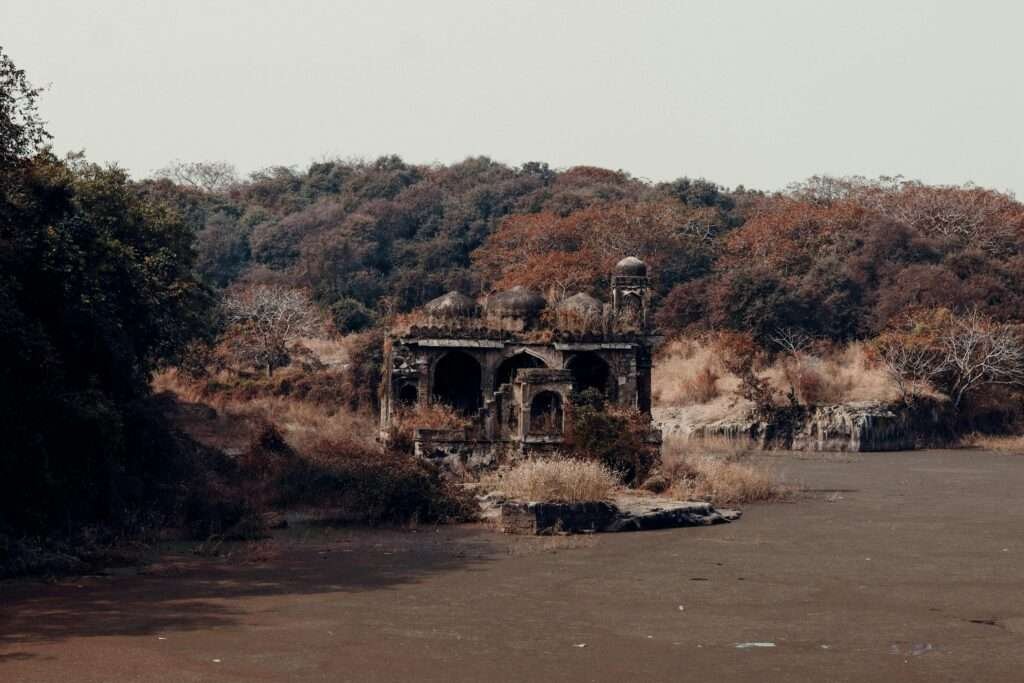

Ranthambore National Park, Rajasthan
One of India’s most reliable places to spot a wild tiger, set around the ruins of a 10th-century fort. Book jeep safaris well in advance, especially in peak season (November to April).
Jim Corbett National Park, Uttarakhand
India’s oldest national park, also known for tiger sightings, plus elephants and over 600 bird species.
Kaziranga National Park, Assam
Home to the world’s largest population of one-horned rhinoceroses, best explored on a jeep or elephant-back safari through tall grasslands.
Planning Your Trip: FAQs
What are the must-visit tourist places in India for first-timers?
The Golden Triangle – Delhi, Agra, Jaipur – covers India’s most iconic sites in a compact, well-connected loop and is the standard first-timer route. If you have 10+ days, add Udaipur or Varanasi to round it out. Go My Trails runs Golden Triangle packages built specifically around this route if you’d prefer it pre-planned.
What is the best time to visit India?
October to March is best for most of the country – cooler and drier. Hill stations like Munnar and Ooty stay pleasant even through the summer (April-June), and South India’s monsoon (July-August) turns the Western Ghats vividly green, which is its own kind of good if you don’t mind rain.
How many days do you need to see India’s best tourist places?
Two weeks is enough to do one region properly – Rajasthan, or Kerala plus Tamil Nadu, for example. A single trip covering both North and South India well takes closer to three to four weeks.
Is North India or South India better for tourists?
North India suits travelers chasing history, deserts, and mountains – forts, the Taj Mahal, the Himalayas. South India suits travelers chasing backwaters, beaches, temples, and a slower pace. Many travelers do a first trip in the north and come back for the south, or vice versa.
If it’s your first trip, start with the Golden Triangle – it’s the most efficient way to see India’s best-known historical sites – then build outward from there based on whether mountains, beaches, or backwaters pull you more. For a fully guided version of this trip, see Go My Trails.